

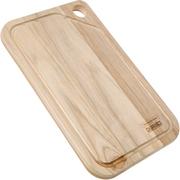
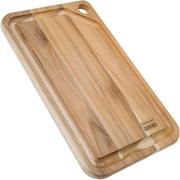
Tramontina Polywood 13274-359 cutting board teak, 40 x 27 cm± 2 weeks
€26.99
You have an outdated webbrowser. The website might not work correctly.
A teak chopping board stands out from the rest, and it is all down to the oil. Teak wood is naturally rich in oil, meaning it absorbs little moisture, does not dry out quickly and is less prone to mould than most types of wood. Teak is also hard and wear-resistant, without being too tough on your knife edge. Many teak chopping boards have a groove to catch the meat juices when you’re letting roast meat rest or carving it, and a handle that allows you to lift the board, complete with the meat, onto the table.




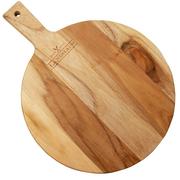

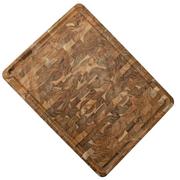


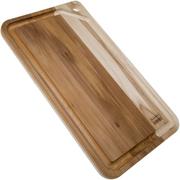

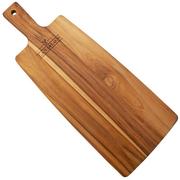

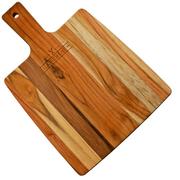

With a teak wood chopping board, its high oil content does most of the work. Thanks to these natural oils, teak is highly resistant to moisture, making the wood less likely to swell or warp and giving bacteria and mould little chance. That is precisely why teak was once used for ship decks.
This is good news for your knives: teak is sturdy, but not so hard that it damages your knife edge. The wood does naturally contain silicic acid, also known as silica or silicon. As a result, teak can be slightly tougher on your knife edge than woods known for being particularly knife-friendly, such as walnut and hinoki wood. Simply sharpen your knives regularly.
You should not put a teak chopping board in the dishwasher either. Rinse it off, dry it with a cloth and store it upright. It needs oiling less often than many other types of wood, but oiling it a few times a year keeps the colour deep. Read here how to do this: maintenance of a wooden chopping board. Find all types of wood in our wooden chopping boards.